All Categories
Featured

Best Employee Dental & Dental Coverage Packages
Table of Contents
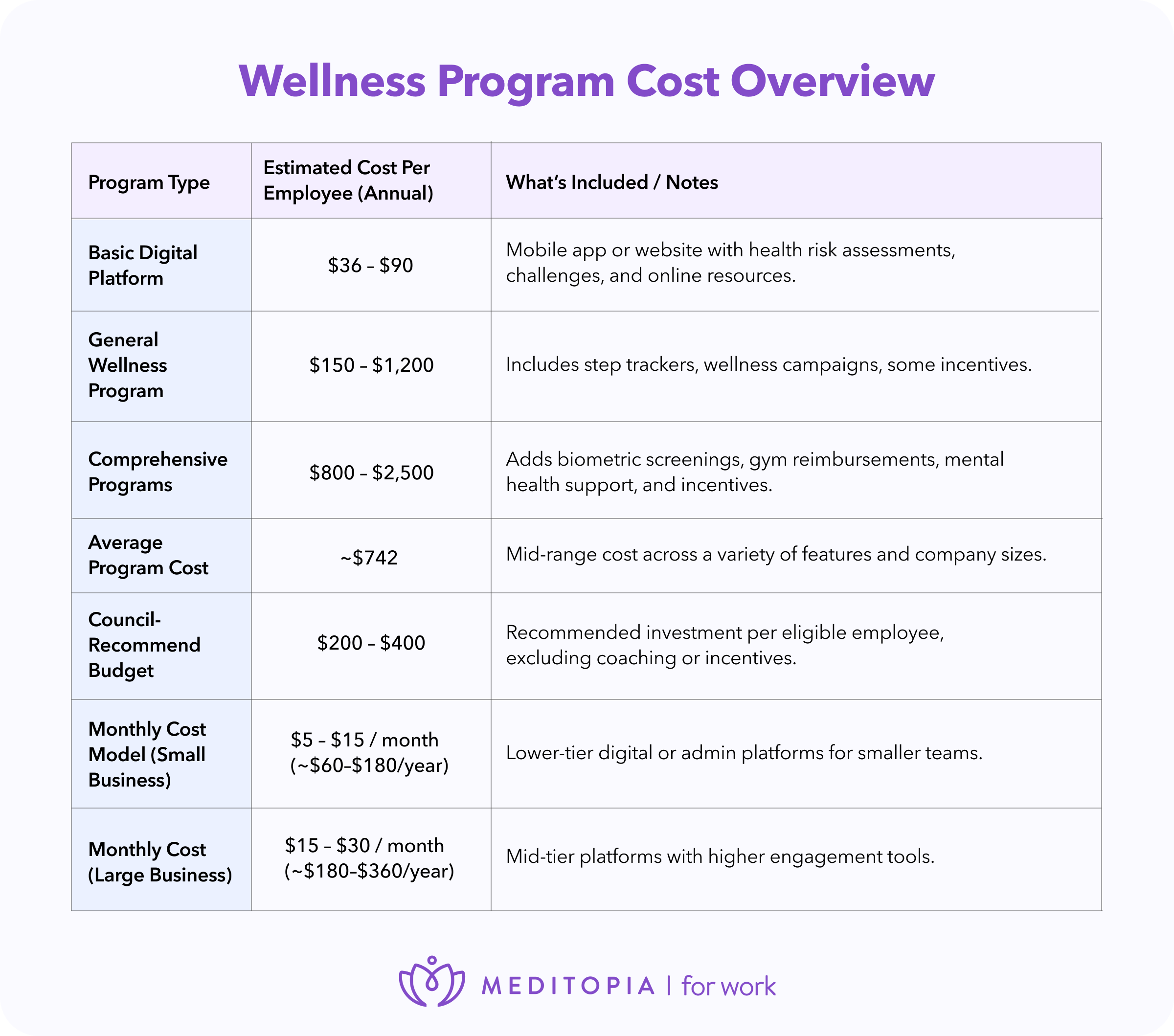
Here's a sample tier design for a wellness program: Tier I: 1-100 staff members Tier II: 101-300 employees Tier III: 301-500 staff members The cost of program designs reduces as the tier level increases. Budget-capped designs allow companies to pick health activities suitable to their office setting and to purchase the program cost-effectively. Basic wellness programs cost less. Including additional screenings, health coaching, and apps increases the costs. Thorough programs with rewards can cost as much as $500-1,000+ per staff member. The more individuals who actively participate in wellness programs, the greater the program's cost. Company B signs up for a health care for 12 months and pays only$ 4500, plus a one-time setup expense of$500. If you do the math based on the above two companies, company A is clearly paying more than business B. This is an easy example of how the expense of worker wellness programs can vary depending upon period. Vantage Fit houses all the wellness services that an employee may need. The platform has whatever from activity tracking to effective physical or psychological health counseling sessions. This minimizes the job of curating different wellness options from various suppliers. Vantage Fit tracks heart rate, nutrition, mood, and activity levels. These metrics give both employees and HR an insight into individual fitness levels. This allows: Tracking essential health markers, particularly Vitamin D, Diabetes, Vitamin B12, and Cholesterol, identifying danger patterns early Supporting preventive care decisions and creating health insights accordingly Motivating employees to stay proactive about their health Routine monitoring and tracking of health reports can assist organizations identify possible risks earlier and promote timely way of life interventions. Early preventive interventions and way of life improvements are commonly related to lower long-term healthcare expensesand minimized risk of persistent conditions. Vantage Fit comes with ready-to-launch health challenges in minutes that are meant to engage employees successfully. Automated templates help decrease the manual hours of developing obstacles, external consultation costs, and training costs, which frequently feature other wellness platforms. However with Vantage Fit, you can produce and offer individualized obstacles that match different workers 'requirements without paying extra. As pointed out above, many platforms have hidden onboarding costs, long-lasting lock-ins, or add-on charges. Nevertheless, Vantage Fit releases its prices upfront on its rates page, so interested companies can see what they'll pay before they commit. The biggest difficulty most companies deal with is profiting of health cares. The main factor is the low involvement rate. Vantage Fit's gamification features consist of a live leaderboard, weekly difficulties, and league classification, which turn the story around for the better. There is another feature of Vantage Fit that holds honorable mention here: Health leagues: Workers are categorized into gold, silver, and bronze leagues based 21-day rolling average action count. With this feature, organizations can: Recognize low-activity groups Run personalized obstacles to improve involvement Track behavioral improvements gradually Align rewards with engagement levels Discover how Vantage Fit provides measurable ROI. The genuine differentiator isn't how much you invest. It's how to invest tactically. Likewise, deal with health as facilities and not an initiative. The cost of business wellness programs is always going to vary in time. With the ideal strategy and platform, sustainable health ROI is possible at any budget tier. Developing a health care budget plan requires a clear understanding of the total expense involved, staff member engagement rate techniques, duration, and present local market prices.
You can promote health in the work environment with basic initiatives, such as providing free healthy treats, satisfying staff members who struck health goals, and supplying physical fitness resources. In the majority of companies, HR leads the implementation process of wellness programs.
These business are known for their extensive wellness programs and efforts, including on-site gym services, psychological health resources, and incentives. Here are some examples of business wellness programs based on the different health dimensions: On-site Fitness Classes, Health Club Subscription Subsidies, and Action Challengess to encourage everyday movement. Directed meditation or mindfulness workshops.
These consist of financial preparation workshops, trainee loan repayment assistance, and access to financial wellness platforms for budgeting and expenditure tracking., stretch breaks, hydration challenges, and flexible working hours, are mostly cost-saving strategies. Wellness efforts like health club subscription discount rates, biometric screening, health training, or other benefits-based incentives come at various expenses.
Why Employee Assistance Programs Lower Health Premiums
Here's the ROI data of the company, Johnson & Johnson: Writing in Harvard Organization Evaluation, the leaders of the program reported that it cumulatively saved the business $250 million on healthcare expenses over a decade, which from 2002 to 2008 the return was $2.71 for every single dollar invested. Note that this is a single large employer's self-reported arise from an older program, so treat it as an upper bound rather than a benchmark.
You can promote health in the office with easy initiatives, such as using free healthy treats, satisfying staff members who struck health goals, and providing fitness resources. In many companies, HR leads the execution procedure of wellness programs.
These business are known for their comprehensive health care and efforts, consisting of on-site health club services, mental health resources, and incentives. Here are some examples of business health cares based on the different health dimensions: On-site Fitness Classes, Gym Membership Subsidies, and Step Challengess to motivate day-to-day movement. Assisted meditation or mindfulness workshops.
These include financial preparation workshops, trainee loan payment assistance, and access to financial health platforms for budgeting and expense tracking. No, the expense of health efforts or concepts differs. Some wellness ideas, such as walking meetings, stretch breaks, hydration difficulties, and versatile working hours, are mainly cost-saving methods. Health initiatives like health club membership discount rates, biometric screening, health coaching, or other benefits-based incentives come at various expenses.
Why Employee Assistance Programs Lower Health Costs
Here's the ROI data of the company, Johnson & Johnson: Writing in Harvard Business Evaluation, the leaders of the program reported that it cumulatively conserved the company $250 million on health care expenses over a years, which from 2002 to 2008 the return was $2.71 for each dollar invested. Keep in mind that this is a single big company's self-reported outcome from an older program, so treat it as an upper bound instead of a criteria.
The third-party service provider handles all the back-end work. You can promote health in the office with simple initiatives, such as using free healthy snacks, satisfying workers who struck wellness objectives, and offering fitness resources. In most business, HR leads the implementation procedure of health cares. Nevertheless, some business have actually a designated health committee that oversees work environment well-being scenarios.
These business are known for their comprehensive health programs and initiatives, including on-site fitness center services, psychological health resources, and incentives. Here are some examples of corporate wellness programs based on the various wellness dimensions: On-site Fitness Classes, Fitness Center Subscription Subsidies, and Action Challengess to encourage everyday movement. Assisted meditation or mindfulness workshops.
These include monetary preparation workshops, trainee loan repayment assistance, and access to financial health platforms for budgeting and cost tracking., stretch breaks, hydration obstacles, and flexible working hours, are mostly cost-saving methods. Health efforts like gym membership discount rates, biometric screening, health coaching, or other benefits-based rewards come at different expenses.
Here's the ROI data of the organization, Johnson & Johnson: Composing in Harvard Organization Review, the leaders of the program reported that it cumulatively conserved the business $250 million on healthcare expenses over a decade, and that from 2002 to 2008 the return was $2.71 for every single dollar spent. Keep in mind that this is a single big company's self-reported arise from an older program, so treat it as an upper bound rather than a standard.

Latest Posts
Expert Strategy for Small Enterprise Group Insurance

Identifying Payroll Insurance Coverage for Small Teams

Evaluating ROI of Investing in EAP Services